Patricia Harris-
Patricia Harris is a dreamer, crafter, gamer and digital artist who loves creativity in life. A half mad poet, her writing is found all over social media and various other websites. She is a devoted mom who can be found doing a variety of art when she isn’t penning poetry and writing words. She is owner of the indie publishing company Fae Corps publishing. For more from Patricia, check out www.Facebook.com/mouseypoet or pattimouse.blog
And for a reading list of her books go to https://books2read.com/rl/PatriciaHarris
And as Serena Mossgraves -
Serena Mossgraves is a twisted faery with a love of gothic settings and an urge to scare. She’s constantly on the prowl for new ways to twist old stories into dark tales that excite and terrify. If you’re also drawn to nightmares, come visit Serena on Facebook at www.facebook.com/serenitysfall Or check out her reading list at https://books2read.com/rl/serenamossgraves
Join us in Celebrating the birthday of the second edition of Andrew McDowell’s Mystical Greenwood.
Dermot is a fifteen-year-old boy in the kingdom of Denú. He has always longed for more in life. Then everything changes after he sees a gryphon and crosses paths with a reclusive healer.
Soon, he and his brother Brian have no choice but to leave their home. They embark on a journey through many forests. They meet an old man and unicorns, witness an important birth, and must evade fire-breathing dragons and dark-armored soldiers that serve an evil sorcerer determined to subjugate Denú.
A legendary coven must now return after years in hiding. Dermot and Brian slowly realize there is something deeper among the trees and creatures, but is there also something more about themselves? Can they protect those they love, or will all Denú be consumed by darkness?
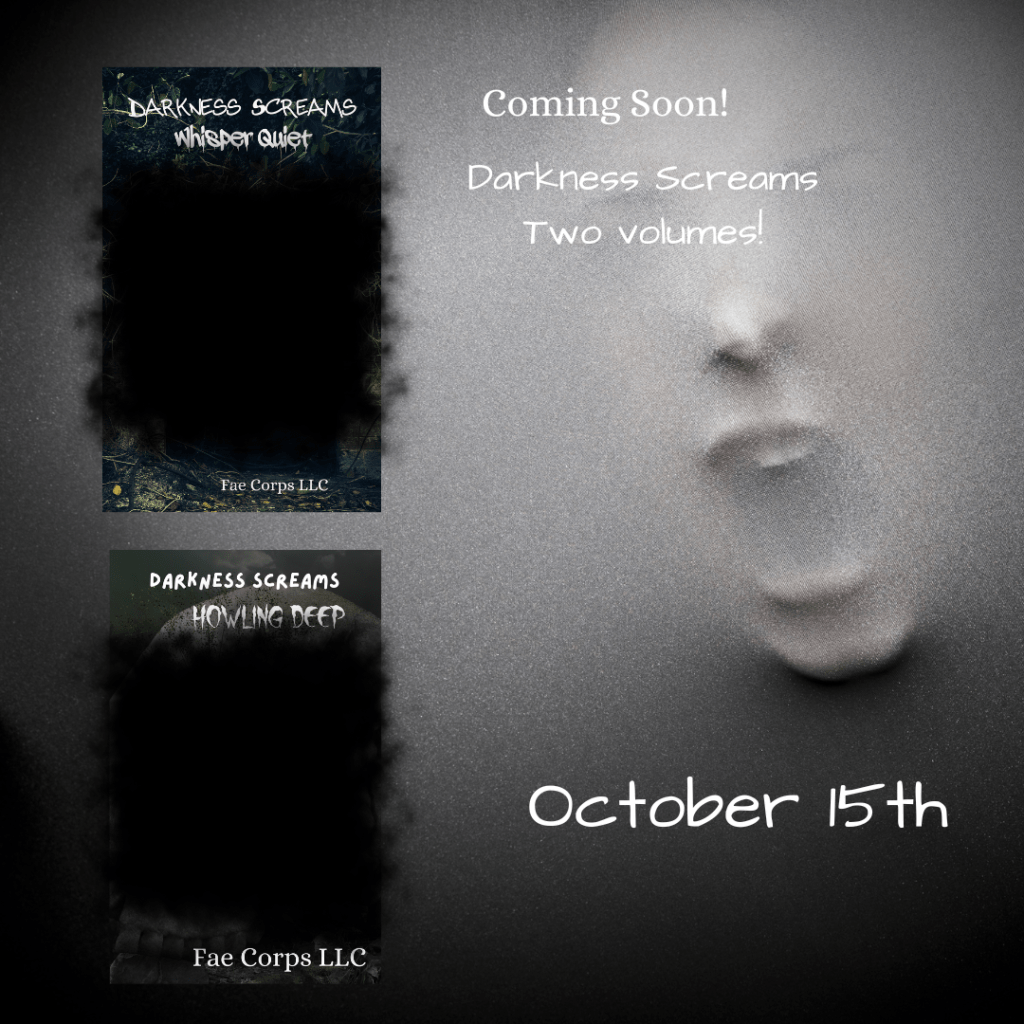
We received so many outstanding submissions that we decided to split the volume. Now we will be releasing 2 volumes. Darkness Screams Howling Deep and Darkness Screams Whisper Quiet. Check back next week for the cover reveal!
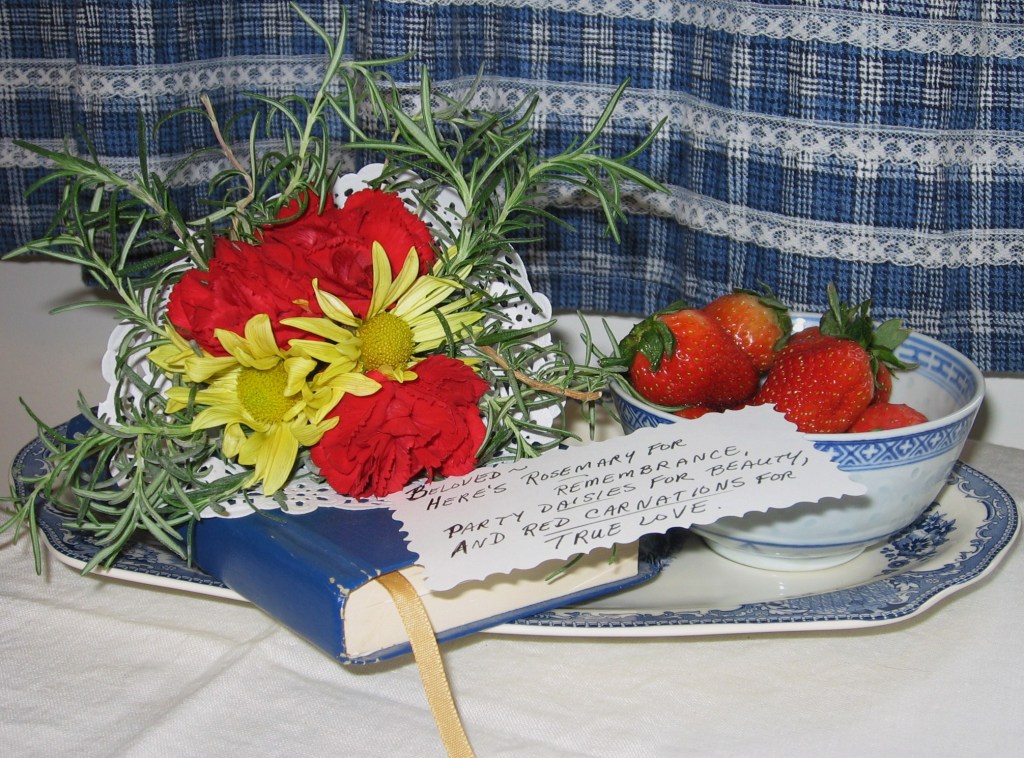
Long before the birth of Great Britain’s Queen Victoria, bunches of flowers were given as gifts to friends and sweethearts. The bright colors, perfumed foliage, and earthy feel of a spray of blooms and leaf fronds were a way of connecting with someone special. But during the Victorian Era, interest in floriography or the language of flowers turned Tussie-Mussies from loving gestures into an art form. Originally, a Tussie Mussie was a small nosegay or posy of blossoms and greenery. Sometimes spelled tuzzy-muzzy, the term is a combination of two words. The first, tuzzy, is the Old English word for the knot of flowers. The second, muzzy, is a name for the damp moss wrapped around the stems of flowers to keep the blooms fresh. During medieval times, small bouquets of fragrant herbs wrapped in swatches of cloth were carried by both men and women to combat the odors of open sewers, farm animals, and a population that bathed infrequently. Held in the hand and pressed to the nose when needed, these aromatic nosegays were also believed to act as disinfectants. Posies of hyssop, rue, wormwood and other odoriferous plants were even thought to ward off the Plague. Little bundles of herbs were also placed near judges in courtrooms to protect them from the diseases carried by the prisoners. Many people of the Middle Ages thought if they carried sweet-smelling posies, they would remain healthy. They strewed boughs of pungent herbs upon the floors of their homes for the same reason. To satisfy the demand for healthful herbs, the woodland fairies of that era must have worked overtime to bless enough leafage and florets. But Victorian Tussie-Mussies weren’t just attractive nosegays, they were living letters. Each piece of plant material included in a Victorian posy conveyed a message. And these messages were based on complex symbolism from the mythology, religion, folklore, and medicinal uses of plants from many cultures. A glance at Greek and Roman myths reveals a wide assortment of flora associated with their gods, goddess, and heroes. One story tells of the Greek youth Narcissus who spurned the love of the beautiful nymph, Echo. He was so enamored with his own reflection that he fell into a pond and drowned. A narcissus plant sprang up where he died. Therefore, it’s no surprise that in floriography, yellow narcissus blooms represent egotism. But many plants broadcast multiple messages. For example, lavender sometimes represents distrust. Why would such an unhappy word be associated with an herb used to revive those who’ve fainted? Perhaps it’s because a scrap of Mediterranean folklore says fairies disguised as tiny snakes hide in lavender plants. The other meanings of this herb, love, and devotion, spring from a different folk belief which claims lavender sprinkled on the head encourages chastity. Mistletoe, sacred to the Druids, grows high above the ground in trees. This is one explanation for why it symbolizes surmounting difficulties. Another possible reason: several ancient cultures and later the Gypsies (or Travelers) used mistletoe as protection against negative spells. In contrast, Norse legend tells of Baldur, son of Frigga, murdered by an assailant using a bow of mistletoe. When Baldur is restored to life, his mother is so delighted that she makes mistletoe a symbol of love and promises a kiss to anyone who passes beneath it. Thus, kiss me and affection are two alternate meanings for a branchlet of mistletoe in a Tussie-Mussie. In the Elizabethan Era, William Shakespeare included plants in his writing. Their placement in his plays and poems both utilized and added to the rich language of flowers that had developed in England. Cowslips or Fairies’-cups, wild thyme (another fairy favorite), violets, woodbine or honeysuckle, musk-roses, eglantine or sweet briar, and other plants appear in A Midsummer’s Night Dream. The hidden meanings of these herbs and blossoms are as magical as one of the play’s main characters, the beautiful Titania. But it took the Turkish language of plants and objects known as Selam, to spark Europe’s infatuation with floriography. When King Charles XII returned to Sweden in 1714 after five years in exile in Turkey, he brought Selam back to his court. Seigneur Aubry de la Mottraye, a writer and world traveler, journeyed to the court of the Swedish king. His account of the visit and the Turkish language of flowers used by Charles XII’s courtiers was published in French in 1727. Shortly after publication, Mottraye’s work was translated into English. Meanwhile, in 1716, Lady Mary Wortley Montagu, wife of the British ambassador, went with her husband to his post in Constantinople. A collection of her letters about the life and customs of the women of Turkey was published in 1763. These letters included a long list from the Selam of flowers and their meanings. Suddenly, Europe in general and England, in particular, were in love with floriography. By the early 1800s, there were hundreds of books listing plants and their meanings. So when Queen Victoria began her reign in 1837, bringing in an era of high morals, modesty, proper decorum, and an interest in botany, the time was right for secret flower messages. But one had to be careful when sending a Tussie-Mussie to a friend or potential spouse. Floriography was not a universal language. The symbolism of flowers varied from book to book and area to area. The only sure way of avoiding a misunderstanding was to send a note or calling card clearly stating the intended meanings of each included bud and leaf. Even how a Tussie-Mussie was presented was important. If a posy was handed to someone right-side-up, it sent a positive message. If the same posy were handed to someone upside-down, all the flowers conveyed the opposite of their usual meanings. A nosegay given with the right hand whispered, “Yes.” The same bouquet given with the left hand said, “No.” During Victorian times, flowers were viewed as a more proper accessory than jewelry. Tussie- Mussies were worn in the hair, pinned to the bodice or at the waist, carried in the hands, attached to men’s lapels and canes, and displayed in the home in lovely vases. They were carried by brides and their attendants. They were given as a get-well wish, a declaration of love, an affirmation of friendship, a token of respect, and a sympathetic gesture. Today, a Tussie-Mussie with a welcome note propped nearby is a wonderful surprise waiting in the spare room for a house guest. These knots of flowers also make fun party favors placed on the table beside each luncheon plate. Just make sure to attach a card with an explanation of the meanings of the flowers. Do fairies like Tussie-Mussies? Why, of course! There’s no better way to communicate with nature spirits than in the language of flowers. So gather some herbs and flowerets, make a tiny nosegay, and tie it together with a length of ribbon. Next, write a letter with the meaning of your Tussie-Mussie clearly stated. Then, leave letter and posy in a sheltered garden spot or nestled amongst the roots of an oak tree. Nearby fairies, elves, and sprites are sure to send thank you blessings your way.
Here we show love to those books that are already out. Tell us about it with it links and blurb! Don’t have but one? Share it! Have not published yet? Share your favorite author. Let’s make the comments pop with suggested reading!
Maybe your next read will be in the comments below! We are always looking for our next read, and everyone asks about your newest volume.
We are looking for your scares. What could scare the monster under the bed? No limit on how scary or dark or not these are.
This anthology is limited to the thriller/horror genre.
Requirements:
Short Story word count min/max: 3k/5k
Art/Photography: up to five must be printable quality
Poetry/Haiku: up to 5 each per topic
~~~~
Submissions Should be emailed to Faecorpspublishing@gmail.com with the subject of Darkness Screams.
Submission is to be sent as either an attachment or Google Docs Link.
Due by August 1, 2022
Specific Genre
Short stories/Poetry/Art/Haiku/Photography.
Currently, there are 9 story slots and 10 slots for art/poetry, etc. We may if we receive enough quality submissions decide to open up more volumes to accommodate more openings.
This is a paid anthology. You will if you get in receive a portion of the royalties…however you will be expected to assist in the marketing of the anthology.
Editing is provided. If your story is in draft form it is still acceptable, however, it must be readable. Gore is acceptable, however, do keep it reasonable, no one wants to read gore for gore’s sake. We do not accept erotica at this time. We are here to showcase good indie authors and are more than willing to help those just getting started.
We will accept stories that have been published before, as long as you retain publishing rights.
Some readers raise eyebrows at the idea of science fiction and fantasy being considered literature. But I believe, if held to the same high standards of writing as more traditional genres, speculative stories and poems can be literature of the best sort. Not only that, but I believe there is a need for the fantastical in our lives. Make-believe is one of childhood’s greatest gifts and, if we’re lucky, an enduring part of our lives. From daydreaming and wishful thinking to the imagined worlds of books, television, films, and video games—it is woven into our culture. Make-believe is a large and varied universe, but there is a special corner where magical beings and miraculous events have thrived since our ancestors first told stories around a cooking fire while shadows played on the cave walls. And the reasons for the hold of fairies, magic, and monsters on humankind haven’t changed much since Homo sapiens stood upright. Though there are somber messages hidden in the fairy tales of childhood, we often associate these narratives with warmth and security. Many of us recall snuggling beside a parent, grandparent, or favorite aunt while she read about a fairy godmother helping the uncomplaining and overworked Cinderella. Or perhaps we shared a plate of cookies with our siblings as we heard about the youngest brother who overcomes monstrous creatures and wins the princess because he is honest and brave. Those stories assured us that if we were virtuous, everything would work out. We’d live happily ever after. The Chronicles of Narnia books by C.S. Lewis and the films based on them are examples of goodness being rewarded with a happy ending. And not only do Peter, Susan, Edmund, and Lucy saves a distant world from evil, and they return at the end of their adventures, a bit wiser, to the same wardrobe in a safe English country manor from whence they departed. Fairy and folk tales also tell us that society needs rules. They’re often cautionary stories that warn of dire consequences for misbehaving or not listening to your elders. The punishments, whether magical or commonplace, for unacceptable behavior in the original Brothers Grimm and Hans Christian Andersen’s tales included death, disfigurement, and banishment. Though these might be too harsh for modern tastes, we still feel satisfaction when there’s a reckoning. The world is in balance again. In J.R.R. Tolkien’s Lord of the Rings trilogy, Middle-earth is filled with turmoil. Characters are kidnapped, killed, wounded, maimed, and taken over by an ancient evil. But in the end, each is recompensed for their actions, and peace returns. Even the condemned ghost king and his soldiers answer the call to save Gondor and finally find peace. Part of the popularity of these books and films is due to the return to normalcy at the conclusion of the narrative. On the last page of The Return of the King, when hobbit Samwise Gamgee approaches The Shire, we read, “And he went on, and there was yellow light, and fire within, and the evening meal was ready, and he was expected. ” Despite broken rules and terrible events, Tolkien assures the reader, ordinary life resumes. As in Tolkien’s imagined world, the land of Faerie and her creatures present an explanation for our fears. If trolls skulk in the forest, giants sleep in caves, and sea monsters swim just off-shore, then we aren’t foolish but prudent, to dread such places. J.K. Rowling links into those phobias in her Harry Potter books. Many of our childhood boogeymen are magnified and made a part of Hogwarts school and its adjoining lands. Trees can attack the unwary. Armies of huge spiders lurk in the woods. Graveyards hide malefic beings. Fantastical stories remind us that even the most courageous men and women need to be aware of monsters crouched in the shadows. Besides suggesting the roots of our fears, fantasy and folktales acknowledge evil does exist. They offer an explanation for why sinister things happen. If your cow won’t give milk, witches must be to blame. If your newborn sickens and dies, it must have been a fairy changeling. If your neighbor is cruel to her children and animals, she must be possessed by a demon. People need to believe there’s a why and wherefore when dreadful events occur. In Nancy Werlin’s young adult novel, Impossible, the author offers a Faerie curse as the genesis of generations of madness and teen pregnancy. To break the pattern, teenage Lucy must solve the riddle presented in the old folk ballad, “Scarborough Fair.” This scenario not only gives a reason for wrong but introduces another lasting element of fairy and folk tales: there’s an answer to every quandary. Here is where magic frequently appears in fantasy narratives. Whether a handful of magic beans, a wand, a ring, a cure-all potion, or a bow and arrows that never miss, the characters in the story are aided by a little hocus-pocus. And why not? When we’ve exhausted all rational options, how lovely it would be to rely on the benevolence of a compassionate wizard to help us out of a quagmire. In fairy stories, there is always an antidote, a Rosetta stone, or a password. There is always hope. Since things are rarely what they first appear to be, fantasy reminds us to beware of judging others. Beneath the dirt, rags, and donkey-skin hides a beautiful princess. Within her monkey guise lives a clever wife. And underneath his beastly exterior, a prince is learning to be a better man. As Neil Gaiman shows us in his book, Stardust, and in the film of the same name, the rough opening in a stone wall might lead not to an everyday-world meadow, but to Faerie. And the concept of inner beauty, a mainstay of fairy stories and folktales, has a ring of truth to it even in our scientific times. It’s magical indeed to witness the splitting of a geode. The plain exterior of the rock gives no hint of the sparkling crystals at its center. Lastly, and most importantly, fantasy allows us to distance ourselves from our day-to-day lives and worries in order to reflect on complex issues. The version of Arthurian legend presented by Marion Zimmer Bradley in The Mists of Avalon does its best to make the reader rethink traditionally held beliefs concerning the roles of women and religion in the Camelot story and beyond. J.R.R. Tolkien examines industry, the environment, war, and friendship in The Lord of the Rings. And countless fairy stories, folktales, and Charles Dickens’ ghostly A Christmas Carol takes a look at miserliness, poverty, and lack of education, through fantasy. This is fantastical literature’s greatest gift. Through make-believe places, races, characters, and creatures, the authors of these tales use metaphor to help us examine the controversial issues of our world. How much easier is it for us to see how the industry is abusing the environment when Tolkien’s Treebeard surveys the decimated landscape around Isengard? Like the hobbits and tree-herder, we understand it’s wrong to cut down trees and burn them to fuel the fires needed to forge weapons for a goblin army. Tolkien holds up a mirror to our own experiences, and we recognize the waste and destruction of greed, power struggles, and war. As long as human beings allow themselves to suspend their disbelief and make-believe, fairy stories, folktales, and legends will exist. Unlike the world we view on the evening news, in the realms of fantasy decency triumphs over wickedness, people get their just desserts, everyone can be afraid sometimes without ridicule, and there’s a reason for bad things. Most of us take comfort in a place where there’s a solution to every problem, things can be beautiful underneath an unattractive exterior, complex issues can be fairly resolved, and at the end of the story, the universe is balanced. And in case you think it’s the books and films of the past that fill the need for the fantastic, a quick glance at your library and local bookstore shelves and the previews of upcoming films and television should convince you otherwise. We need fantasy as much today, if not more so than in the past. From early childhood, we are exposed to make-believe worlds. No matter how strange the locale, they are familiar because we recognize a part of ourselves in the characters. Fairies, magic, and even monsters will continue to be threads running through the human tapestry because they offer us hope and bring order to chaos. Let the following excerpt from March Cost’s The Bitter Green of the Willows serve as your invitation to visit the gossamer-winged, dragon-scaled corner of the make-believe universe, “And why I’ve told you this is just because we never know what lies in wait for us some Primrose Eve, for when next the Silent Magician, who lives behind the rain, waves his wand for you and me, we may wake to find we’ve landed in another, very different world…” (p.73-74)
What are you working on? Share with us a teaser for something that you are or have done. Share links too so that we can find you! Don’t feel like sharing your work? Well share another indie so that they can be seen!
Welcome to the first official edition of Ask Raz (Ask Jerry)! I know what you’re asking yourself. Who the F*^! Is Raz? Why would I want to ask him anything? What makes him qualified to answer questions in the first place? Worry not, dear readers. All shall be revealed.
I’m currently working on an MFA in literature and creative writing. I’m a published author with a few accolades under my belt. I’ve been around the block more than a few times and have seen the best and the worst in the indie publishing community. I’m not more qualified than anyone else (not what you told me) in the industry to run a segment like this, but I appear to have an honest and unique view that people may find refreshing.
I’ve done segments like this in articles, newsletters, podcasts, and radio shows for different industries over the years. I started doing it as a teenager actually, after some heavy inspiration from Ren & Stimpy and their “Ask Dr. Stupid” segments in their ‘toons and comics. What started as a fun thing to do, quickly became something I enjoy.
I stalked some writing communities and thoroughly infiltrated others (Never trust a guy in a turtle costume and a trench coat.) to come up with the inaugural question for this segment. For future editions, you can email your questions to raztslasher@gmail.com with the subject line “Ask Raz”.
I hired a team of trash pandas to tally up the possible questions to answer, and put it in letter form. This is what they assembled:
Dear Raz,
I write. I’m a writer. I want to write more. I want to write better. How can I? Please advise.
Signed,
A. Writer
P.S. – Jerry needs more trail mix.
While not the most elegant or professional way to ask for advice, there are a few things to digest here (Don’t worry Jerry, your trail mix is on the way. Can you please stop altering the document?).
What we see here is a version of the most frequent question asked in writer’s groups and collectives the world over. There are a few major issues here, despite the typing capabilities of trash pandas. Can you spot them? Take a closer look. Go on, do it. I’ll wait.
…
…
…
…
…
This isn’t actually a question.
Again, I know what you’re thinking. “I see question marks and it looks like a question to me.”
While those points are technically correct, it misses the heart of the issue.
What we actually have here are multiple questions and several assumptions, puzzle-pieced together to form the ultimate writing question. Sadly, the number isn’t 42 (regardless of what Jerry insists).
Here’s the breakdown of what’s actually happening in this question and some understanding of why you’re unlikely to get an all encompassing answer, or, at least, the same answer from different writers.
“I write. I am a writer.”
This isn’t a fantastic way to preface a question like this. We have to assume you’ve written words at some point if you’re asking the question. We also have to assume you are or want to be a writer. What you aren’t telling us is more important. Your situation.
Maybe you only write about giant sentient sporks that fly around hunting evil spaghetti haired penguins, all while blasting “Spoon-Man” by Soungarden from a tiny boom-box mounted on their backs with hot glue and the hopes and prayers of humanity’s last remnants.
Maybe it’s a story about a turtle. I like turtles (We know, Jerry).
EIther way, this is important information required to receive a sensible answer to any question following it.
While I’m well aware that the only natural enemies of evil spaghetti haired penguins are indeed sporks, I couldn’t possibly know your contribution to this age-old war unless you mention it.
Armed with this information, I would tailor and translate my response to you in a way that makes sense in your situation. That would be immensely more helpful to you than a general blanket response.
“I want to write more. I want to write better. How can I?”
This is where things get convoluted. Three questions are being asked here and framed as one. The questions asked, while related to one another, are quite different. No one can possibly answer this as the singular question it’s intended to be. Let’s break that down further.
“I want to write more.”
This should be its own question. Other information is required here as well. Why aren’t you writing as much as you would like? What barriers exist to keep you from that goal? That could be anything from being a parent to having no access to the tools needed to write.
Just like the previous example, the response would be entirely different based on that information. If you were a parent I’d offer advice to carve out time for your writing and how to set boundaries. If you didn’t have access to writing tools, I would refer you to programs geared towards assisting you in getting basic writing supplies or a computer.
Maybe the reason is based on the biggest problems for writers; imposter syndrome and/or writer’s block. I could provide a plethora of advice. I could even have Jerry send you links to articles written by people far smarter than I am to help you on your journey. I’m sure he’d love that (I would).
“I want to write better.”
More information please! I have no way of knowing how you personally measure success or what standard you ascribe to. Keep in mind that I’ve never seen your writing, so I can’t even hold it up to my own personal standards.
Yes, you read that right, every writer has their own personal set of standards. While a lot is generally agreed upon, which you can easily learn in school or by reading books on the subject of writing, there is a seemingly endless combination of individual pet-peaves and preferences out there.
How can you avoid this? Do some research. Direct your questions to writers that exemplify the qualities you had in mind when first creating your unique sets of checks and balances.
Just, please, whatever you do, don’t direct your questions to Jerry. Despite what he’ll have you believe, he did not invent the oxford comma; nor did he revolutionize the use of semicolons (Yes I did). He can barely even type. He’s a raccoon for f*^!’sake. The last time we did this segment I kept getting his fan mail by mistake. Some of you should consider professional help.
“How can I? Please advise.”
Remember many paragraphs ago when you thought this was an actual question because of the use of a question mark? Now that we’ve closely examined the precursor to this, I hope you have a more clear understanding. This is not a question.
If anything, it’s a fancy candy wrapper. Many people equate the candy wrapper to being part of the candy itself, but is it? It provides no flavor or sustenance. It exists only to disguise and protect its contents. It also forces you to do extra work to gain some modicum of satisfaction, when all you really needed was a tried and true bag of trailmix to get you started (Jerry, this is a live document. People can see what you’re doing!)(good).
Conclusion
The questions being asked are just as important as the answers you seek. In this case, we need to be specific about what we’re asking for and who we ask it from.
Using all the above examples, I will now re-craft Jerry’s original letter (mine was better).
Dear Raz,
As a historical writer that focuses on the never ending battle between sporks and spaghetti haired penguins, I’ve hit a bit of a snag. I greatly admire your attention to detail and your work with strange and esoteric subject matters and thought you’d be the perfect person to reach out to for advice.
My first problem has to do with the frequency of my writing. My wife and I have two teenagers at home and I struggle to find time to sit down and write. As a family man yourself, I was hoping you might have some suggestions.
I could also use some tips on structure and formatting. I’m having a hard time finding the right vehicle for my first ever novel, entitled, “Spork Mating Rituals: The Rise of Revolution.” It features a collection of transcripts, interviews, and essays from experts all across the globe.
General writing tips to better my craft would also be greatly appreciated!
Thanks in advance,
A. Writer
Here’s my official response, which will be the traditional ending to every segment of this I do. I hope I’ve managed to help you add some tools to your writing shed, or at the very least, put you on a path toward discovering them on your own!
Dear A. Writer,
That’s quite a topic you’re working with and certainly one that deserves more attention. The lofty goal of complete world domination by spaghetti haired penguins, and their beady little eyes, must be stopped at all costs! I’m honored that you would turn to me during this time of need.
It can be hard to carve out some writing time with a busy schedule. My first suggestion is that you let your hostages go. While teenagers can be worth their weight in gold in the child army, they can be more trouble than they’re worth. If you’re having trouble parting with them, try having children of your own. That could greatly decrease any possible legal troubles that may arise as well.
My other suggestion on the topic of frequency is to set a “closed door” schedule. With this you’d set aside an hour or two each day in which you will be unavailable. I do this by literally closing the door to my office at the same time every day and ignoring those I live with. What’s the worst that could happen? Maybe someone loses an eye or a kidney, but that’s why we have two of each, right?
On a more serious note, schedule this “closed door” time with your family. Let them know how important this is to you. Create a way for them to contact you in case an emergency arises. If it’s a physical door at home, they can knock. If you write elsewhere, start a family chat on an agreed upon social media outlet.
When it comes to structure and formatting, there are certainly a lot of options. I’m sure by now you’ve done an online search. Those results can be overwhelming. I’d recommend reading a book from five different modern pioneers in the historical field to see the commonalities between their structures and formats. You may find a standard, or common ground, that suits your individual needs perfectly.
On the subject of general writing tips, here’s one not often discussed that I think will be of help to you.
Never stop writing. Have a way to jot down notes and ideas around the clock. Most modern communication devices have programs and/or apps for this. For the old school writers among us, taking a notebook and pen wherever you go is a great option.
This little notebook or text file could save you from writer’s block or any number of things some day. Use it wisely!
Yours in Madness,
A. B. O’Trailmix (Seriously Jerry?! I’m starting to rethink this entire arrangement!)






 Fae Corps Publishing